Moving Somalia: The $2.9 Billion Logistics Opportunity

Moving Somalia: The $2.9 Billion Logistics Opportunity
The Geography of Opportunity
Somalia has 3,330 kilometers of coastline. It sits at the mouth of the Red Sea, where 12% of global trade passes. It borders Ethiopia, the second-most populous country in Africa, landlocked and hungry for port access. It faces Yemen, the Gulf states, and India across waters that carry oil, goods, and people.
This should be a logistics hub. Instead, it's a logistics afterthought.
The reason is infrastructure. Decades of conflict destroyed roads, ports, and the systems that move goods. What remains is fragmented: small jetties instead of deep ports, dirt tracks instead of highways, informal networks instead of organized supply chains.
The government wants to change this. $2.9 billion — the largest sector allocation in the entire pipeline — is earmarked for logistics and infrastructure. Roads, ports, trade corridors, dry docks. The physical backbone of an economy.
For Xidig members, this is where capital meets location. Where diaspora networks become trade routes. Where land becomes bankable.
The Projects: Building the Backbone
1. Road Rehabilitation — 3,825 km ($1.07B)
Rehabilitation of existing key tarmac roads across Somalia. Not new construction — fixing what's broken. Currently, moving goods from Mogadishu to Baidoa takes 2.6 days; after rehabilitation, this drops to 5-12 hours.
Xidig Angle: Land near rehabilitated roads appreciates 30-50%. Members are identifying parcels now, before construction announcements.
2. New Trade Corridors — 2,075 km ($1.21B)
New asphalt roads connecting border towns to major port cities. Expanding the network to serve landlocked Ethiopia's 120 million people.

Key Corridors:
- Ethiopia border → Mogadishu port
- Kenya border → Kismayo port
- Interior regions → Hobyo port
Xidig Angle: This is the Ethiopia play. Members with cross-border connections can facilitate trade, warehousing, and customs brokerage.
3. New Deep Seaports — 3 Locations ($1.01B)
Three new deep seaports in Mogadishu, Hobyo, and Barawe. Modern mechanization. Positioned to handle container ships and the volume required for regional trade.
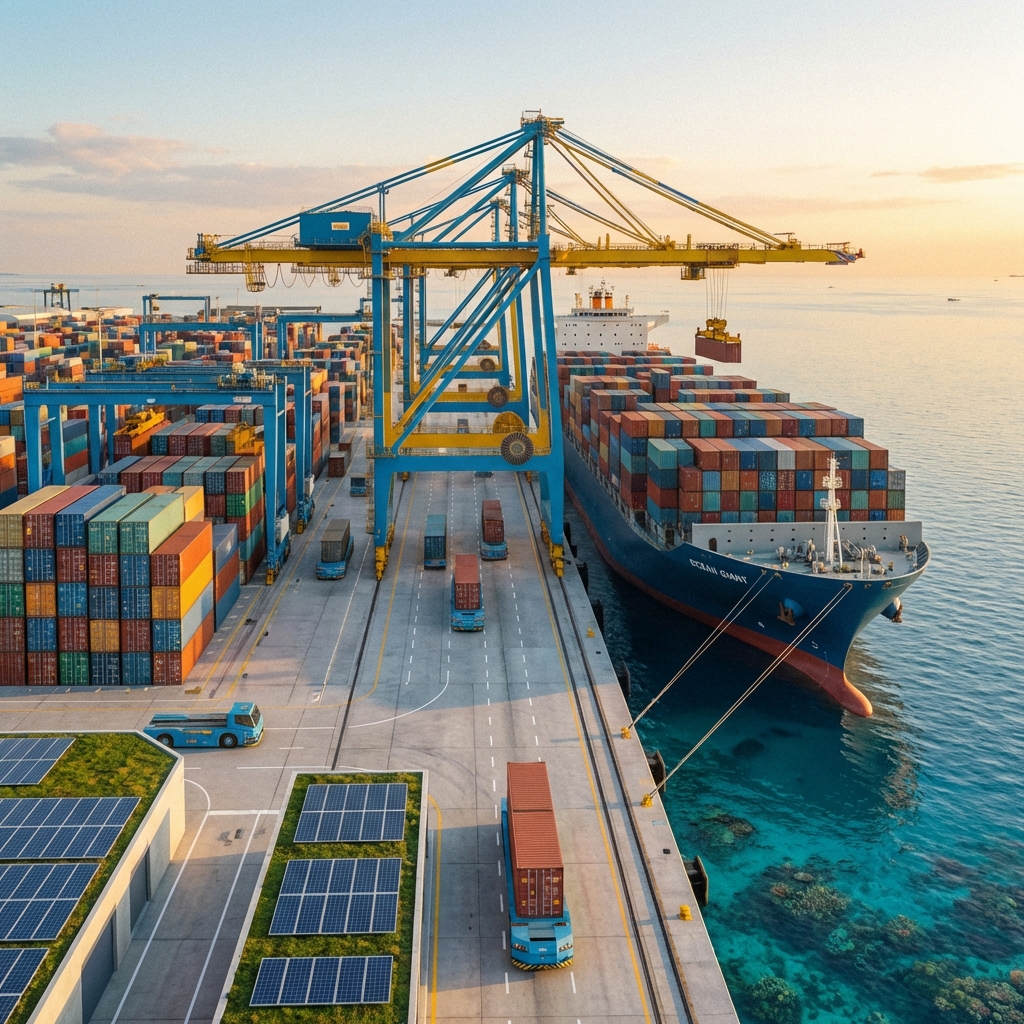
Xidig Angle: Port concessions offer multiple revenue streams—operations, stevedoring, and warehousing.
4. Port Modernization — 3 Ports ($551M)
Upgrading existing ports at Bosaso, Gara'ad, and Kismayo. Faster revenue and lower risk than greenfield construction.
5. Dry Dock at Mogadishu ($112M)
Ship repair, maintenance, and marine services facility. Captures business that currently flows to Dubai or Mombasa.

6. Fishing Jetties — 3 Locations ($20.7M)
New fishing ports in Marka, Adale, and Laasqoray. Enables industrial-scale fishing, processing, and export.
The Investment Case
- Geographic destiny: Crossroads of global trade; infrastructure unlocks the potential.
- Ethiopian demand: 120 million people need port access; Somalia is the logical alternative.
- Land appreciation: Desert becomes warehouse sites; isolated areas become accessible.
- Operating leverage: Concession agreements (20-30 years) provide long-term cash flow.
Risks and Mitigations
| Risk | Reality | Mitigation |
|---|---|---|
| Construction risk | Large civil projects | International EPC contractors, fixed-price contracts |
| Usage risk | Traffic doesn't materialize | Ethiopian trade agreements, production guarantees |
| Political risk | Federal/state coordination | Government guarantees, Xidig relationships |
| Security risk | Site protection | Insurance, local partnerships, phased rollout |
For Builders: The Lab Model
Infrastructure isn't just for investors with capital. It's for builders who can execute. The lab model lets members participate through shared ownership and profit-sharing.
Lab Roles
- Project Lead: Gov relations and permitting.
- Construction Lead: Engineering and quality control.
- Operations Lead: Day-to-day logistics management.
- Land & Community: Acquisition and stakeholder relations.
- Commercial Lead: Customer acquisition and pricing.
Employment Impact
A single trade corridor project can create 800+ jobs. Across three corridors, logistics labs can employ 2,400+ Somalis, coordinated through member-connect.
Xidig Member Playbook
Immediate (0-6 months)
- Map land parcels near planned road corridors and ports.
- Assess Ethiopian trade connections — identify cross-border relationships.
- Form land banking syndicate for strategic acquisitions.
Medium-term (6-18 months)
- Acquire land ahead of construction announcements.
- Partner with international port operators to share risk.
- Bid on construction contracts via diaspora-led firms.
Conclusion
You can't build an economy without moving goods. Somalia's geography—the coastline, the Ethiopia border, the Red Sea crossing—is its greatest asset.
$2.9 billion is allocated to rebuild the physical foundation for everything else in the pipeline. This isn't just construction; it's the bedrock that enables energy, agriculture, and manufacturing to scale.
For Xidig members, logistics offers land appreciation and long-term cash flow. But more importantly, it offers employment—2,400+ jobs through labs that share ownership and returns.
The roads are being drawn. The ports are being planned. The question is who builds them.
Published by Xidig Economic Intelligence Research by Xidig members Data source: SOMINVEST, Ministry of Public Works, Reconstruction and Housing Join the waitlist: xidig.net