Regional Economic Comparisons: East Africa
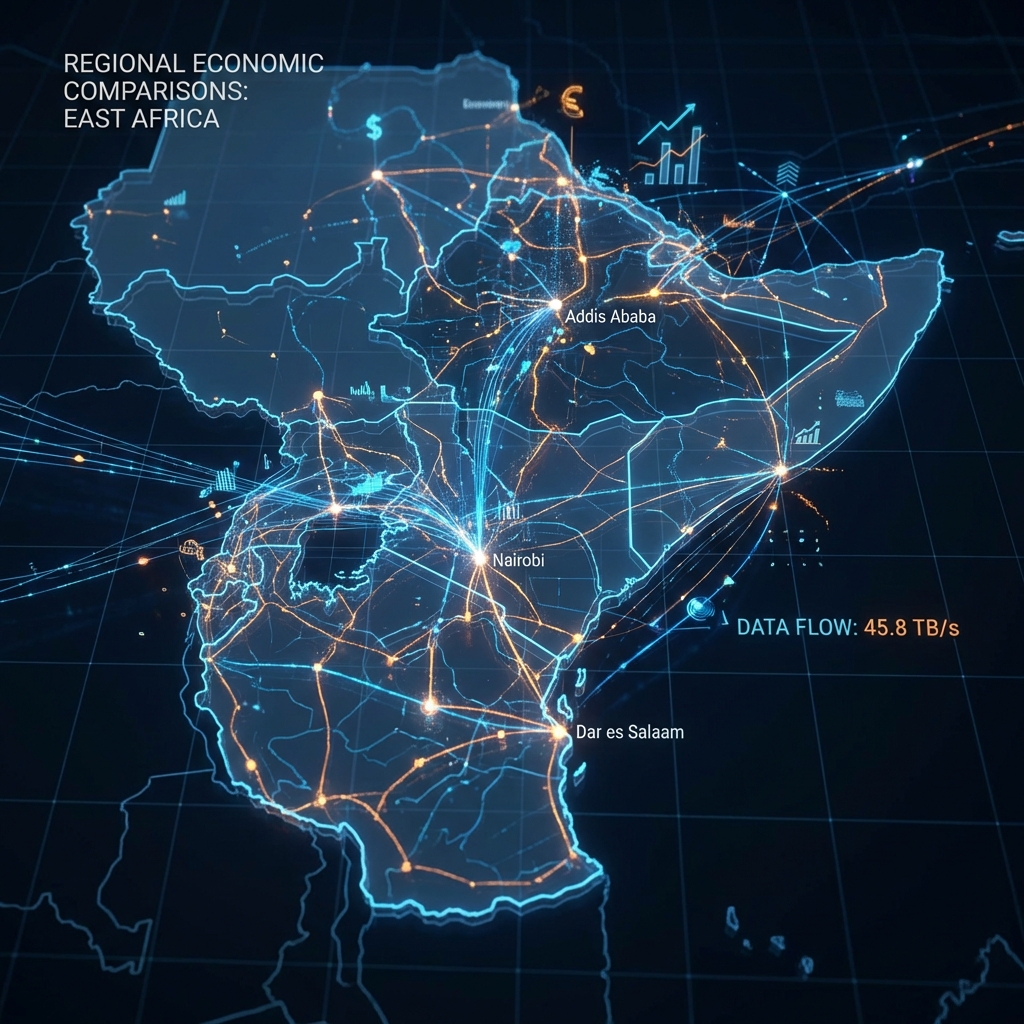
Regional Economic Comparisons: Somalia in the East African and Horn of Africa Context
Somalia's economy operates within a complex regional context, marked by post-conflict recovery, structural vulnerabilities, and emerging opportunities. While neighboring countries like Kenya, Ethiopia, and Djibouti benefit from diversified sectors, infrastructure investments, and stable institutions, Somalia faces unique challenges: weak governance, infrastructural deficits, and currency instability.
However, its strategic location (3,300 km coastline), resilient informal sector (e.g., mobile money innovations like Zaad), and $2.3B annual diaspora remittances signal potential for growth. This report compares Somalia’s economic performance with Kenya, Ethiopia, Djibouti, Uganda, Tanzania, Sudan, South Sudan, and Eritrea, highlighting challenges and opportunities for regional integration.
GDP Growth Rate Comparisons
| Country | Growth Rate | Key Drivers | Insights |
|---|---|---|---|
| Somalia | 3.7% (2023) | Remittances (24% of GDP), agriculture, informal trade | Volatile growth, vulnerable to climate/political risks. |
| Kenya | 5-6% | Tech, tourism, agriculture | Steady growth from diversified sectors. |
| Ethiopia | 6.2% | Industrialization | Historically rapid (7-8%), slowed by recent instability. |
| Djibouti | 6.5% | Port logistics, infrastructure FDI | Anchored by port logistics and FDI in infrastructure. |
| Uganda/Tanzania | 4-5% | Agriculture, natural resources | Growth driven by primary sectors. |
| Sudan/S. Sudan | Negative | Conflict, oil dependency | Highly volatile and negative due to conflict. |
| Eritrea | 2-4% | Isolationist policies | Stagnant growth due to limited integration. |
[!TIP] Somalia lags behind peers due to security risks but could narrow the gap by leveraging regional trade integration (EAC/IGAD) and modernizing agriculture/fisheries.
Inflation Rate Comparisons
| Country | Inflation Rate | Contributing Factors |
|---|---|---|
| Somalia | 15-20% | Dual-currency instability, counterfeit currency, supply-chain disruptions |
| Kenya | 3-5% | Effective central bank policies |
| Ethiopia | 20-25% | Currency depreciation, supply bottlenecks |
| Djibouti | 2-3% | USD-pegged currency board |
| Uganda/Tanzania | 5-8% | Managed monetary policies |
| Sudan/S. Sudan | Hyperinflation | Economic mismanagement |
| Eritrea | 2-4% | Low official rate, distortions |
Key Insight: Somalia’s inflation challenges reflect monetary fragmentation. Adopting regional models like Djibouti’s currency peg or Kenya’s inflation targeting could stabilize prices.
Foreign Direct Investment (FDI) Flows
| Country | Annual FDI | Key Sectors |
|---|---|---|
| Somalia | $100-150M | Telecoms, mobile money |
| Kenya | $1-1.5B | Tech, renewables |
| Ethiopia | $2-3B | Manufacturing, industrial parks |
| Djibouti | $500-800M | Port/logistics |
| Uganda/Tanzania | $300-500M | Agriculture, mining |
| Sudan/S. Sudan | Limited | Restricted by conflict/sanctions |
| Eritrea | Negligible | Isolation |
Key Insight: Somalia’s FDI potential lies in niche sectors (renewable energy, telecoms) if paired with governance reforms. Ethiopia’s industrial parks and Kenya’s tech hubs offer replicable models.
Trade Relationships and Balances
| Country | Trade Status | Key Features |
|---|---|---|
| Somalia | Chronic deficits | Exports: livestock/fish (85%); EAC access to 300M consumers |
| Kenya | Trade surplus | Manufactured goods (tea, flowers), regional hub status |
| Ethiopia | Growing surplus | Textiles/industrial exports, still import-reliant |
| Djibouti | Transit hub | Handles 95% of Ethiopia's trade |
| Uganda/Tanzania | Mixed balances | Agriculture/minerals focus |
| Sudan/S. Sudan | Volatile | Oil-dependent trade |
| Eritrea | Limited | Minimal integration |
Key Insight: Modernizing ports (Berbera, Mogadishu) and diversifying exports (e.g., fisheries processing) could boost Somalia’s trade position through EAC/IGAD networks.
Business Environment Metrics
| Country | Status | Key Features |
|---|---|---|
| Somalia | Poor | High informality, weak property rights; reforms in progress |
| Kenya | Good | Digital transformation (eCitizen), progressive reforms |
| Ethiopia | Fair | Industrial incentives but hindered by bureaucracy |
| Djibouti | Good | Strong logistics sector, port investment focus |
| Uganda/Tanzania | Fair | Ongoing reforms showing moderate improvement |
| Sudan/S. Sudan | Poor | High-risk environment deterring business |
| Eritrea | Poor | Private sector limited by state control |
Infrastructure Development
| Country | Status | Key Features |
|---|---|---|
| Somalia | Poor | 33% electrification, inadequate roads; renewable potential |
| Kenya | Advanced | Standard Gauge Railway, modern tech infra |
| Ethiopia | Developing | Renaissance Dam, industrial parks |
| Djibouti | Advanced | Modern ports, Djibouti-Addis Ababa Railway |
| Uganda/Tanzania | Moderate | Chinese-backed roads and energy info |
Currency Stability & Monetary Policy
- Somalia (Unstable): Dual-currency system, counterfeit issues, limited central bank capacity.
- Kenya (Stable): Effective forex reserves management.
- Djibouti (Stable): USD peg provides superior stability.
- Ethiopia (Declining): Birr depreciation despite managed float.
Labor Market & Employment
- Somalia: 75% informal sector; Youth unemployment >67%. Requires vocational training partnerships.
- Kenya: Growing formal jobs in tech/services; urban youth unemployment persists.
- Ethiopia: Significant labor shift from agriculture to manufacturing (apparel).
Competitive Advantages & Disadvantages
Advantages
- Strategic Maritime Location: Critical for regional trade routes.
- Digital Innovation: Mobile money penetration (155%) and telecom leadership.
- Natural Resources: Untapped agriculture and fisheries potential.
- Diaspora Support: $2.3B annual remittances funding local SMEs.
Disadvantages
- Security & Stability: Ongoing risks impacting long-term investment.
- Infrastructure Deficits: High operational costs for energy and transport.
- Regulatory Fragmentation: Lack of unified business laws across regions.
Conclusion
Somalia’s economy faces systemic challenges compared to regional peers but retains unique opportunities. Strategic reforms in currency management, infrastructure (PPPs in energy/ports), and regional integration (EAC/IGAD) could unlock growth. Learning from Kenya’s diversification, Ethiopia’s industrialization, and Djibouti’s logistics success, Somalia can leverage its youthful population, diaspora networks, and geographic position to emerge as a regional trade hub.
References
- World Bank (2023). Country Economic Reports for East Africa.
- IMF (2023). Regional Economic Outlook for East Africa.
- African Development Bank (2023). East Africa Economic Digest.
- Central Banks of respective countries.
- EAC/IGAD regional integration reports.
- Reuters, Trading Economics, and IMF eLibrary data.