Somalia's $3.9 Billion Investment Pipeline: The Xidig Member Access Guide
Somalia's $3.9 Billion Investment Pipeline: The Xidig Member Access Guide
Executive Summary
Somalia's government has published something rare: a complete shopping list of investment opportunities. $3.9 billion across energy, infrastructure, health, agriculture, and more. Pre-vetted. Sector-organized. With incentives attached.
This isn't a wishlist. These are bankable projects with government backing, clear timelines, and defined returns. The question isn't whether the opportunities are real. It's who gets to them first — and how.
Xidig members are positioning to be that "how."
The Pipeline at a Glance
| Sector | Investment | Project Count | Timeframe |
|---|---|---|---|
| Logistics & Infrastructure | $2.9 billion | 8 projects | 2025-2029 |
| Energy | $850 million | 7 projects | 2025-2029 |
| Aviation | $672 million | 2 projects | 2025-2029 |
| Health | $387 million | 5 projects | 2025-2029 |
| Education | $346 million | 3 projects | 2025-2029 |
| Telecom & Digital | $290 million | 2 projects | 2025-2029 |
| Environment & Manufacturing | $143 million | 2 projects | 2025-2029 |
| Fisheries | $58 million | 3 projects | 2025-2029 |
| Agriculture & Livestock | $42 million | 5 projects | 2025-2029 |
| Sports & Youth | $25 million | 2 projects | 2025-2029 |
| TOTAL | $3.9+ billion | 39 projects | 2025-2029 |
Why This Matters Now
Somalia is not the country most investors think it is.
- Debt relief achieved: December 2023 — HIPC completion validated, debt-to-GDP dropped to ~6%
- Economic growth: 4.1% GDP growth in 2024, projected 3.7-4.0% through 2029
- Demographics: 70% of population under 35, 16.3 million people, $2.4 billion annual remittances
- Strategic location: 3,330 km coastline, gateway to East Africa and Middle East
- Investment regime: 15% corporate tax, 5% VAT, partial import exemptions, work permit waivers
The government isn't just open to investment. They're actively structuring opportunities to attract it.
Sector-by-Sector Breakdown
Energy: Powering the Foundation ($850M)
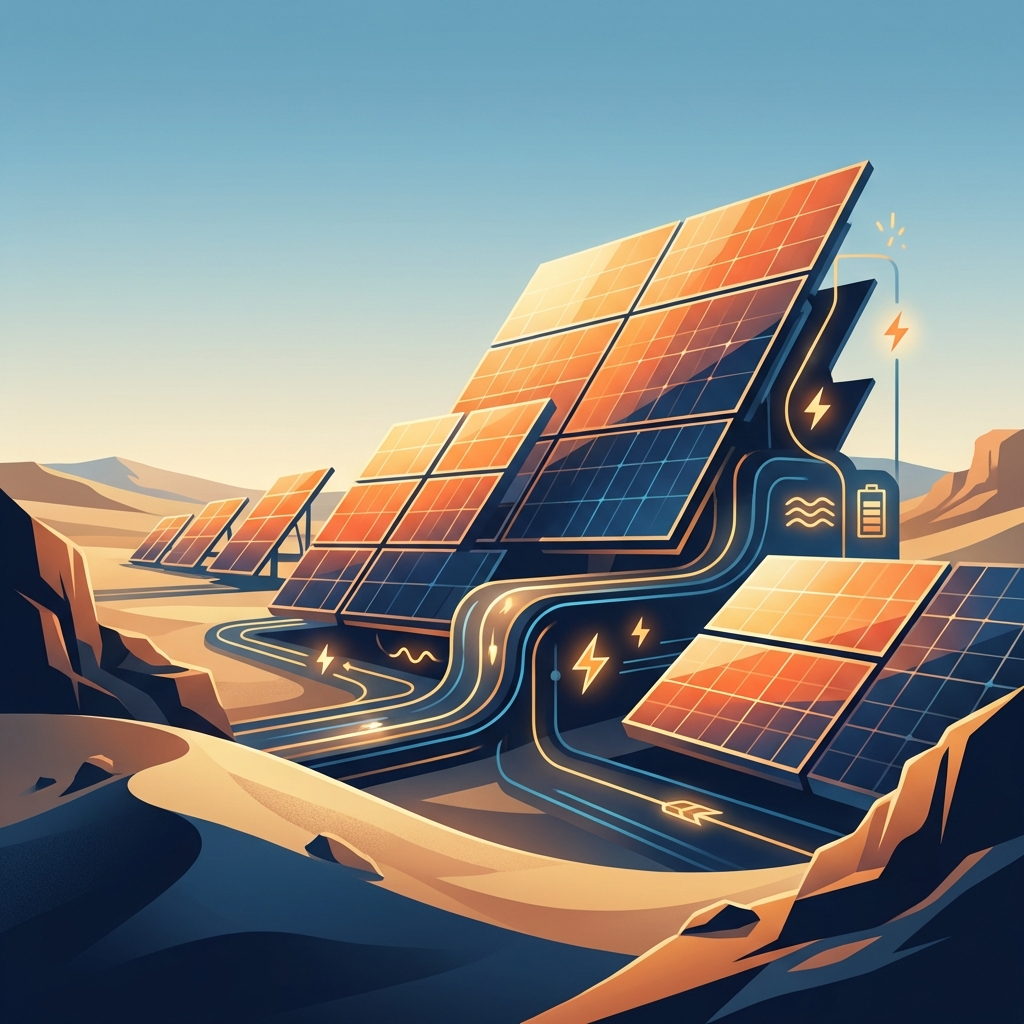
Somalia has an energy problem and an energy opportunity. 70% of the country is off-grid. Electricity costs $0.61/kWh — among the highest in the world. The government wants to cut this to $0.30/kWh and unify a fragmented system.
Key Projects:
- 100 MW solar farm + battery storage ($132M) — Mogadishu area, 20-year concession
- 15 off-grid solar plants ($75M) — 5 MW each, 15 secondary towns
- Gas processing plant ($169.5M) — domestic gas utilization
- HFO power plants ($450M) — 100 MW each in 4 cities
- Solar panel manufacturing ($5M) — supply East Africa
- National electricity company setup ($11.7M) — unifying transmission & distribution
Xidig Member Angle: Members are already exploring mini-grid syndicates. The 15 off-grid solar projects match diaspora hometown connections perfectly.
Logistics & Infrastructure: The Physical Backbone ($2.9B)
You can't build an economy without moving goods. Somalia's infrastructure was destroyed by decades of conflict. Rebuilding it is the government's top priority.

Key Projects:
- Road rehabilitation ($1.07B) — 3,825 km of existing roads
- New trade corridors ($1.21B) — 2,075 km connecting border towns to ports
- New deep seaports ($1.01B) — Mogadishu, Hobyo, Barawe
- Port modernization ($551M) — Bosaso, Gara'ad, Kismayo
- Dry dock at Mogadishu ($112M) — ship repair, currently done in Dubai/Mombasa
- Fishing jetties ($20.7M) — Marka, Adale, Laasqoray
Xidig Member Angle: Land near corridor routes is appreciating 40% year-over-year. Members are pooling capital for land banking syndicates ahead of construction announcements.
Aviation: Gateway to the Region ($672M)
Mogadishu's current airport cannot expand. It's hemmed in by the city. The government wants to build a new international airport and renovate four regional ones.
Key Projects:
- New Mogadishu International Airport ($656M) — greenfield site, cargo hub potential
- Regional airport renovations ($16.5M) — Kismayo, Baidoa, Beledweyne, Dhuusamareeb
Xidig Member Angle: Diaspora construction firms with Middle East experience are natural partners. Duty-free retail concessions at the new airport are unallocated.
Health: Reversing Medical Tourism ($387M)
Somalis spend over $100 million annually on medical treatment abroad — primarily India, Turkey, and Kenya. The government wants to reverse this flow.

Key Projects:
- 8 new referral hospitals ($230.6M) — one per region
- 18 regional hospital upgrades ($95M) — PPP model with private wings
- Cancer treatment center ($50M) — 40% projected ROI, $100M market capture
- Domestic pharmaceutical production ($11M) — 70% of medicines currently imported
Xidig Member Angle: The cancer center alone captures a $100M annual outflow. Members with healthcare backgrounds are assessing equipment supply and management contracts.
Education: Building Human Capital ($346M)
46% adult illiteracy. Student-teacher ratios exceeding 35:1. A generation that missed education due to conflict. The government is investing heavily to catch up.
Key Projects:
- New education infrastructure ($298M) — thousands of schools, 12 TVET centers, 3 university campuses
- Alternative education pathways ($27.4M) — adult literacy, skills training
- Digital education (ALFA) ($21M) — e-learning, offline tablets, radio programs
Xidig Member Angle: EdTech ventures serving this market have guaranteed demand. Members are exploring content development and distribution partnerships.
Telecom & Digital: The Enabler ($290M)
Somalia has surprisingly advanced mobile money (pioneered before M-Pesa). But internet penetration lags. The government wants to fix this.
Key Projects:
- Connectivity expansion ($225M) — 4G/5G rollout, fiber cables, 5M internet users target
- E-government & data centers ($65M) — 84 essential services digitized, first national data centers
Xidig Member Angle: Digital infrastructure enables every other sector. Members with fintech and SaaS plays need this backbone.
The Rest: Diversifying the Economy ($268M)
- Fisheries ($58M): 3,330 km coastline, currently artisanal. Processing hubs, vessel modernization, new fishing ports.
- Agriculture ($42M): Seeds, fodder, dairy, poultry, meat processing. Food security priority.
- Environment ($143M): Waste-to-energy plant ($133M), cooking oil refinery ($10M, 25% ROI).
- Sports ($25M): Stadiums as youth engagement and peacebuilding tools.
The Access Problem + Xidig Solution
The Access Problem
Here's the catch: knowing about these projects doesn't mean you can execute on them. Foreign investors face:
- No local partner network
- No government relationships
- No on-ground verification
- No deal flow curation
- High due diligence costs
- Large minimum check sizes
The result: Most foreign investors pass. The capital doesn't flow. The projects stall.
The Xidig Solution
Xidig members solve the access problem through structure.
| Problem | Xidig Approach |
|---|---|
| No local partners | Members are the local partners — diaspora with roots, relationships, and skin in the game |
| No government access | Xidig has direct SOMINVEST relationship, pipeline visibility, early deal flow |
| High due diligence costs | Shared across member syndicates, not borne by single investor |
| Large minimum investments | Pooled capital allows members to participate in bigger projects |
| No verification | Members on the ground provide real-time project monitoring |
| Complex structures | Xidig legal/compliance support for PPP, JV, and concession agreements |
The model: Xidig doesn't just inform members about opportunities. It enables participation.
Member Engagement + Opportunities
How Members Engage
- Level 1: Intelligence: Access to curated project information, feasibility studies, and sector analysis. Know what's real before anyone else.
- Level 2: Syndication: Pool capital with other members to meet minimum investment thresholds. Participate in $10M+ projects.
- Level 3: Direct Investment: Lead projects with member capital, local partner matching, and Xidig structural support.
- Level 4: Operating Partner: Bring expertise (construction, healthcare, energy, etc.) and capture management contracts, not just equity returns.
Immediate Opportunities
Based on project readiness and member capabilities, Xidig is prioritizing:
- Q1 2026: Solar mini-grids, Land banking near trade corridors, Cancer center equipment supply.
- Q2 2026: Fishing processing hubs, EdTech content development, Pharmaceutical manufacturing.
- Q3-Q4 2026: Airport construction partnerships, Port logistics concessions, Road construction JV.
Terms, Risks, Conclusion
Investment Terms Summary
- Corporate tax: 15%
- VAT: 5%
- Import duties: Partial exemption for capital goods
- Work permits: Waived for 5 top management officials
- Residency: Permits for board and CEO
- Land: Long-term leases available
- Repatriation: Permitted under Foreign Investment Law
Risk Factors (Addressed)
- Security: South Central Somalia has stabilized significantly; Puntland and Somaliland are business-friendly; insurance available for most sectors.
- Currency: Somali Shilling has stabilized; USD widely used; hedging possible through remittance networks.
- Political: Federal system requires multi-level engagement; Xidig's government relationship de-risks this.
- Execution: Local partner quality varies; Xidig member vetting addresses this.
Conclusion
Somalia needs $3.9 billion in investment. The government has done the work of identifying, vetting, and packaging opportunities. The pipeline is real. The incentives are competitive. The timing is now.
What's missing is the connective tissue between global capital and local execution. Between foreign investors who have the money and Somali operators who have the relationships. Between opportunity and reality.
That's what Xidig provides.
The pipeline is open. The only question is who moves first.
Published by Xidig Economic Intelligence Research by Xidig members Data source: Somalia Investment Promotion Office (SOMINVEST), Ministry of Planning, Investment and Economic Development Join the waitlist: xidig.net